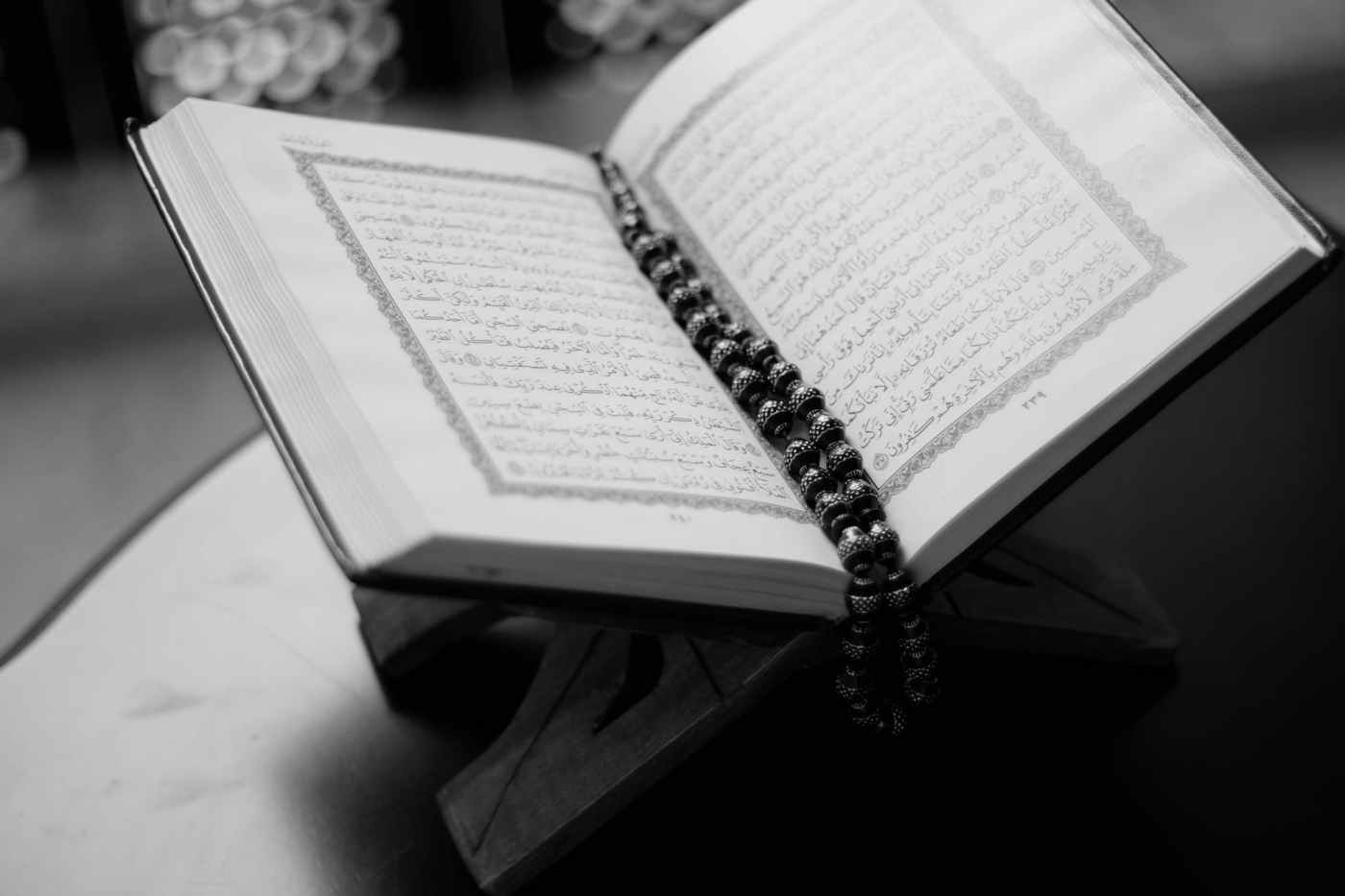
ذَٲلِكَ ٱلۡڪِتَـٰبُ لَا رَيۡبَۛ فِيهِۛ
Although most translations would say, “This is the book”, ذَٲلِكَ actually means “that”, rather than “this”. The translations are correct, because the intent of ذَٲلِكَ here is the qareeb i.e. “this”. However, the use of the distant ismul ishara ذَٲلِكَ has a balagha benefit. It is used for veneration (ta’dheem). It magnifies the rank of the Qur’an, for example, by alluding to distance in rank, i.e. the Qur’an is far above us in rank.
You could consider the above ayah to be a single sentence, in which case ذَٲلِكَ ٱلۡڪِتَـٰبُ (“This book”) becomes the mubtada (subject) and لَا رَيۡبَۛ فِيهِۛ (“there is no doubt in it”), the khabr (predicate?). In this case, the translation would be something like, “This book has no doubt in it” [Taqi Uthmani].
Alternatively, you could split the ayah into two separate sentences, and the meaning that would be conveyed in this case is quite amazing:
The first sentence is ذَٲلِكَ ٱلۡڪِتَـٰبُ, where ذَٲلِكَ is the mubtada (subject) and ٱلۡڪِتَـٰبُ is the khabr. Note that both mubtada and khabr here are definite (ta’reef al-tarfayn). The usual case is for mubtada to be definite and khabr to be indefinite e.g. “This is a book.” However, making both parts of the sentence definite creates restriction and confinement, i.e. “This is the book”, i.e. no other book is a book in comparison to it! Subhanallah.
The second sentence لَا رَيۡبَۛ فِيهِۛ comes to nullify any potential question about whether this statement is actually true or an exaggeration.
As there is no “و” (“and”) joining the two sentences this is an instance of “Fasl”, where no conjunction is used between sentences A and B, but both are in complete harmony. This is a topic of balagha called “Wasl and Fasl”. Here, sentence B is re-enforcing A.
When connecting sentences A and B with a “و”, they need to have some similarity but they also need to have some differences as well, i.e. they should have munasaba and mughayarah. E.g. when A and B are opposites:
إِنَّ الاٌّبْرَارَ لَفِى نَعِيمٍ – وَإِنَّ الْفُجَّارَ لَفِى جَحِيمٍ
Verily, the Abrar (the righteous believers) will be in Delight. And verily, the wicked will be in the blazing Fire (Hell). [Al-Infitar: 13-14]
When B is reinforcing A, or B is badal from A, there won’t be a “و” conjunction. And that is what’s happening in the above ayah from Al Baqarah. Sentence A is magnifying the rank of the Qur’an and sentence B is reinforcing it by negating any doubts. And the two are, thus, in complete harmony.
If you found this post beneficial, please share and subscribe below.
 Qur'anic Reflections
Leave a comment